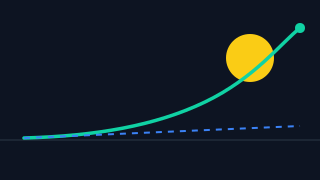
Keeping savings in a bank account feels like the safest choice: the balance never goes down. But that number does not tell you how much it can buy, and that is where inflation comes in.
Inflation: the hidden cost of idle money
Inflation is the rise in prices over time. The European Central Bank aims to keep it around 2% a year, but at times it has been much higher: in 2022 it went above 8% in several European countries.
With average inflation of 2% a year, in 20 years €100 will buy what about €67 buys today. The balance is the same, but it is worth a third less.
This is why we distinguish between nominal and real return: nominal is the number you see, real is what is left after inflation. An account that pays nothing actually has a negative real return.
Compound interest: time on your side
When an investment grows, the gains are added to your capital and in turn produce more gains. This is compound interest, and its effect grows stronger over the years.
Investing €200 a month for 30 years at a hypothetical 6% annual return would add up to about €200,000, from €72,000 paid in. Starting 10 years later, with everything else the same, you would reach about €92,000, from €48,000 paid in.
In the second case you pay in two thirds of the money but end up with less than half the result. Time makes the difference, which is why your time horizon is one of the most important factors in investing.
The other side of the coin: risk
The returns in these examples are assumptions, not promises. The investments that have returned the most over the long run, such as stocks, are also the ones that swing the most: in some years they can lose 30% or 40% of their value.
Investing therefore means accepting short-term ups and downs in exchange for the chance to grow your capital over the long term. How much risk suits you depends on your goals, when you will need the money and how you would react to a sharp fall.
- Inflation reduces the value of idle money every year.
- Compound interest rewards those who invest early and consistently.
- Higher returns come with bigger swings: time helps absorb them.