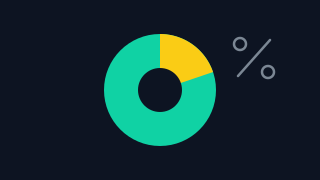
Asset allocation is how you split your money between stocks, bonds, cash and other asset classes. It is the most important decision in a portfolio: it affects the outcome far more than the choice of any single ETF.
First things first: an emergency fund
Before investing, it helps to set aside a cash reserve for the unexpected, often suggested at 3 to 6 months of expenses. It keeps you from having to sell investments at the wrong moment.
The factors to weigh
- Your time horizon: the more years before you need the money, the more swings you can handle.
- Your goals: retirement, a home or your children’s education have different timelines, and can have different allocations.
- Your capacity for losses: how much a fall would affect your life.
- Your emotional tolerance: how you would react to seeing your portfolio lose a third of its value.
Some typical examples
There is no allocation that suits everyone, but some mixes are very common.
- Conservative: about 30% stocks and 70% bonds and cash. Limited swings, lower expected return.
- Balanced: about 60% stocks and 40% bonds. The classic compromise.
- Growth: 80% stocks or more. Higher expected return, and potentially very sharp falls.
In 2008 a 60/40 portfolio lost roughly a fifth to a quarter of its value, an all-stock portfolio about 40%.
There are also rules of thumb, such as holding a percentage in stocks equal to 100 or 110 minus your age. They are a starting point, not an answer: two people of the same age can be in very different situations.
Write it down and stick to it
Once chosen, your allocation becomes your target. In the Horizon app you can save it in a Rebalance preset, so you can see at a glance how far your portfolio is drifting from it.
Changing it often, chasing the markets, is one of the most costly mistakes. It makes sense to review it when your life changes, not when the news does.
- Asset allocation matters more than any single ETF.
- It depends on time, goals and how you react to falls.
- Once chosen, stick to it and review it only for personal reasons.